
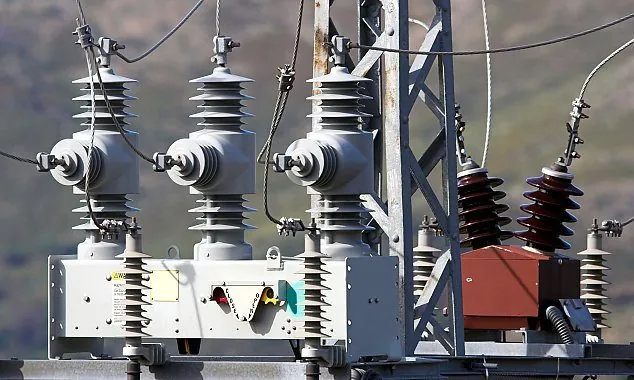
FPI - Fault Passage Indicator
Locate an MV fault within seconds and cut your outage time - study, supply, installation and SCADA integration by ENERTEC.
Definition - Fault Passage Indicator (FPI)
The fault passage indicator (FPI) is an electronic device designed for MV (medium voltage) electrical networks (1 to 50 kV) that signals, both locally and remotely, the passage of a fault current. It is one of the essential components of distribution network telecontrol.
By detecting the fault as close as possible to where it occurs, the FPI enables the network operator to identify the affected network section within seconds, without having to physically patrol the entire line. The result: a drastic reduction in average outage duration (SAIDI) and a direct improvement in quality of service.
Also known as: fault current indicator, faulted circuit indicator (FCI). Reference specifications: HN 45-S-50, HN 45-S-51 (ENEDIS).
How does a fault passage indicator work?
The operating principle of an FPI is based on measuring the current flowing in the MV line through one (or three) current-sensing toroids (CT rings) fitted around the conductors. The toroid acts as a current transformer: it reproduces a faithful image of the primary current, scaled down so the indicator's electronics can process it.
When a current above the preset threshold flows through the conductor - typically several hundred amperes, characteristic of a short circuit - the FPI switches to the “fault detected” state:
- a high-brightness LED lights up on the unit or on a remote indicator lamp on the substation front, visible from outside
- a dry contact is made available to report the event to the RTU and the control center
- some variants (“communicating” FPIs) include an RS-485 interface or a GPRS/4G modem for direct reporting without an intermediate RTU
- the indicator remains in alarm until it is reset manually or automatically (timed reset)
Architecture of a fault passage indicator
Electronic unit
Houses the processing board, the threshold detection module, the time delay, and the power supply (battery plus optional auxiliary supply).
Current-sensing toroids
One or three toroids depending on the configuration (one per phase for multi-phase detection). Split-core models allow installation on existing networks without any service interruption.
Indication
Local LED on the unit plus a remote external LED lamp visible from the street or the roadside.
Signaling output
Voltage-free dry contact wired to the RTU for telecontrol, or a serial/network interface on communicating versions.
Standard or directional FPI: choosing the right indicator for the neutral earthing system
The choice between a standard FPI and a directional fault passage indicator depends essentially on the neutral earthing system of the target MV network:
Current-threshold FPI
Detection by current threshold. It detects multi-phase faults and short circuits regardless of the neutral earthing; for single-phase earth faults, it suits networks with solidly earthed or low-impedance earthed neutrals. The most economical and most widely deployed solution.
Directional FPI
Combines current and voltage measurement to determine the direction of the fault. Essential on networks with compensated (Petersen coil) or high-impedance earthing, where earth faults generate low currents.
Standards and specifications
Fault passage indicators deployed in France and in countries adopting this framework meet strict specifications:
- HN 45-S-50 (October 1981, updated) - current-threshold fault passage indicators for underground and overhead-underground MV networks
- HN 45-S-51 (February 2011) - directional fault passage indicators for underground networks with compensated (Petersen coil) earthing
- IEC 62271-200 - metal-enclosed MV switchgear
- IEC 61869 (formerly IEC 60044) - instrument transformers (current and voltage)
- IEC 60870-5-104 - telecontrol protocol for sending the information up to the SCADA system
Common brands and models
ENERTEC helps its customers select the FPI best suited to their network. References commonly deployed in West Africa include:
- Schneider Electric - DAX range (underground), Easergy Flair (multi-function)
- Ensto - LYNX 4400 (underground networks with compensated earthing)
- Horstmann - Sigma F+, Compass B (overhead and underground)
- NORTROLL - LineTroll, CableTroll (ranges proven across Europe and Africa)
- ABB, Siemens, General Electric - modules integrated into their digital protection ranges
See our partners page for the full list of equipment manufacturers ENERTEC works with on a daily basis.
Why the FPI is strategic in West Africa
MV networks in West Africa have several characteristics that make the FPI particularly valuable:
- Very long lines in rural and peri-urban areas (several tens of kilometers between two primary substations)
- Difficult access during the rainy season and in wooded areas
- Widely dispersed assets with a limited number of maintenance crews per regional division
- A demanding tropical climate for equipment (humidity, heat, lightning)
Without FPIs, locating a fault on a long line takes several hours of manual investigation. With an appropriate mesh of FPIs, fault location becomes almost instantaneous. The return on investment is fast: fewer outage hours, more satisfied customers, and compliance with the quality-of-service requirements set by national regulators.
ENERTEC's FPI offering
ENERTEC supports its customers across the entire life cycle of an FPI project:
Design & sizing
Network analysis, model selection (standard FPI, directional FPI, communicating), threshold definition, toroid sizing based on nominal and fault currents.
Supply
Procurement of the indicators from partner manufacturers, equipment qualification, management of factory certificates and documentation traceability.
Installation
Installation under lockout/tagout on overhead networks or in MV/LV substations, connection of the toroids, wiring of the external indication and of the signaling contact to the RTU.
Commissioning & testing
Primary injection tests, verification of the tripping threshold, checks of the local indication and of signal transmission to the control center.
SCADA integration
Configuration of the digital (on/off) points in the SCADA database, setup of alarms and mimic displays at the regional control center.
Maintenance & training
Periodic inspections, battery replacement, and training of local operations teams in day-to-day use and diagnostics.
Frequently asked questions about FPIs and MV fault detection
Concise answers to common questions about the fault passage indicator and its integration into MV network telecontrol.
What is a fault passage indicator (FPI)?
A fault passage indicator (FPI) is an electronic device for MV networks that detects the passage of a fault current above a preset threshold. It consists of an electronic unit, one to three current-sensing toroids fitted around the conductors, local LED indication and a dry contact wired to the RTU.
What is the difference between a standard FPI and a directional FPI?
A standard FPI detects a fault by current threshold only. It is suitable for networks with solidly earthed or low-impedance earthed neutrals and for phase-to-phase faults. A directional fault passage indicator combines current and voltage measurement to determine the direction of the fault. It is required on networks with compensated (Petersen coil) or high-impedance earthing.
How is a fault passage indicator installed?
On overhead networks, the FPI is installed in a cabinet at the base of the pole or directly on the switching device. The current-sensing toroids are fitted around the MV conductors. On underground networks, it is integrated into the MV/LV substation. Power can be self-contained (battery) or auxiliary. The signaling contact is wired to the RTU for telecontrol.
Which standards apply to fault passage indicators?
The reference for the current-threshold FPI is HN 45-S-50 (October 1981); HN 45-S-51 (February 2011) covers directional indicators for compensated-earthing networks. The IEC standards applicable to MV equipment also apply (IEC 62271, IEC 61869 - formerly 60044).
What is the role of the FPI in an MV network telecontrol system?
In a telecontrol system, the FPI provides the fault location information. When a short circuit occurs, the FPIs installed on the section carrying the fault current switch to alarm. The control center instantly receives the signals and identifies the faulty section. The operator can then remotely operate the switches to isolate the faulty section and reconfigure the network.
Which FPI brands are available on the market?
The main manufacturers include Schneider Electric (DAX, Easergy Flair), Ensto (LYNX 4400), Horstmann, NORTROLL, ABB, Siemens and General Electric. ENERTEC helps you select the right FPI based on the neutral earthing system, the network type and SCADA integration constraints. See our partners page.
Why is the FPI so important on West African networks?
MV networks in West Africa are characterized by very long lines, often in rural areas, and widely dispersed assets. Without FPIs, locating a fault means physically patrolling the line (several hours). Installing FPIs at the key nodes drastically reduces fault location time and therefore the average outage duration (SAIDI).
Planning an FPI or MV fault detection project?
Our engineers will study your network and propose a tailor-made FPI solution. Reply within 48 business hours.