
Remote control of electrical networks
Solutions for MV (medium-voltage) network telecontrol and remote monitoring of electricity distribution networks. ENERTEC, a recognized leader in Côte d'Ivoire and West Africa.
Automation of
electrical distribution networks
ENERTEC designs and deploys equipment for the automation of medium-voltage electricity distribution networks. Optimizing continuity of service is a strategic challenge for Distribution System Operators.
ENERTEC's network automation solutions provide an effective answer to this challenge, combining proven technologies adapted to field conditions in West Africa.
Our solutions include MV fault passage indicators, protection and control cabinets for MV switches, and interface cabinets for distributed energy generation.
What is electrical network telecontrol?
Telecontrol - definition
Telecontrol of an electrical network means remotely monitoring, measuring and operating a set of devices distributed across the network: circuit breakers, load-break switches, disconnectors, current and voltage sensors, fault passage indicators. It relies on a SCADA (Supervisory Control and Data Acquisition) system, remote terminal units (RTUs), intelligent electronic devices (IEDs) and a communication network (optical fiber, radio, GPRS/4G).
The goal: reduce the average interruption duration, make operations more reliable, locate faults instantly and optimize network reconfiguration switching when incidents occur.
International standards: IEC 60870-5-104 (telecontrol protocol), IEC 61850 (digital substations), IEC 60050-371-01-01 (vocabulary).
How does a telecontrol system work?
An MV network telecontrol system is built on four complementary layers: instrumentation as close as possible to the equipment, local data acquisition by RTU-type controllers, secure data transmission to a control center, and real-time operation by dispatchers.
Instrumentation
Current and voltage sensors, fault passage indicators (FPI), directional fault passage indicators, temperature probes, auxiliary contacts on MV switchgear.
Data acquisition (RTU)
Remote Terminal Units that collect measurements, binary statuses and alarms, run local automation sequences and communicate with the control center over IEC 60870-5-104 or IEC 61850.
Communication
Optical fiber for strategic links, GPRS/4G LTE for remote substations, private radio for rural areas. Cybersecurity through network segregation, VPNs and strong authentication.
SCADA / DMS / OMS
Real-time supervision platform, distribution management system (DMS), outage management system (OMS). Graphical interfaces for dispatchers at the control center.
Why is telecontrol strategic for Côte d'Ivoire and West Africa?
Distribution networks in West Africa have distinctive characteristics: very long MV lines in rural areas, geographically scattered loads, a tropical climate that is demanding on equipment, and an asset base in need of modernization. Without telecontrol, every incident requires traveling to site, locating the fault manually, and hours or even days of outage for customers.
MV network telecontrol delivers:
- immediate fault location thanks to fault passage indicators (standard and directional) and protection relays
- remote network reconfiguration through remote operation of switches and remote-controlled overhead load-break switches
- reduction of the average interruption duration from several hours to a few minutes
- improvement of the SAIDI / SAIFI quality indices required by regulators
- preventive maintenance through trend analysis of current, voltage and temperature
This is precisely the expertise ENERTEC has been deploying for more than a decade on the Ivorian MV network: 247 remotely controlled substations under the ENERGOS project in Abidjan, and more recently lots 2 and 3 of the NEDA program in the north and west of the country.
The Fault Passage Indicator (FPI)
The fault passage indicator (FPI) is an essential component of MV network telecontrol. Installed on the feeders of MV/LV substations and at strategic nodes of the overhead and underground network, it signals the passage of a fault current both locally and remotely. It allows operators to identify the affected network section within seconds, without physically walking the entire line.
How does a fault passage indicator work?
The FPI measures the current flowing in the MV line through one (or three) current-sensing toroid(s) placed around the conductor. When a current above the set threshold passes through - typically several hundred amperes, characteristic of a short circuit - the indicator switches to the "fault detected" state: an LED lights up at the substation, and a dry contact is sent to the RTU for reporting to the control center.
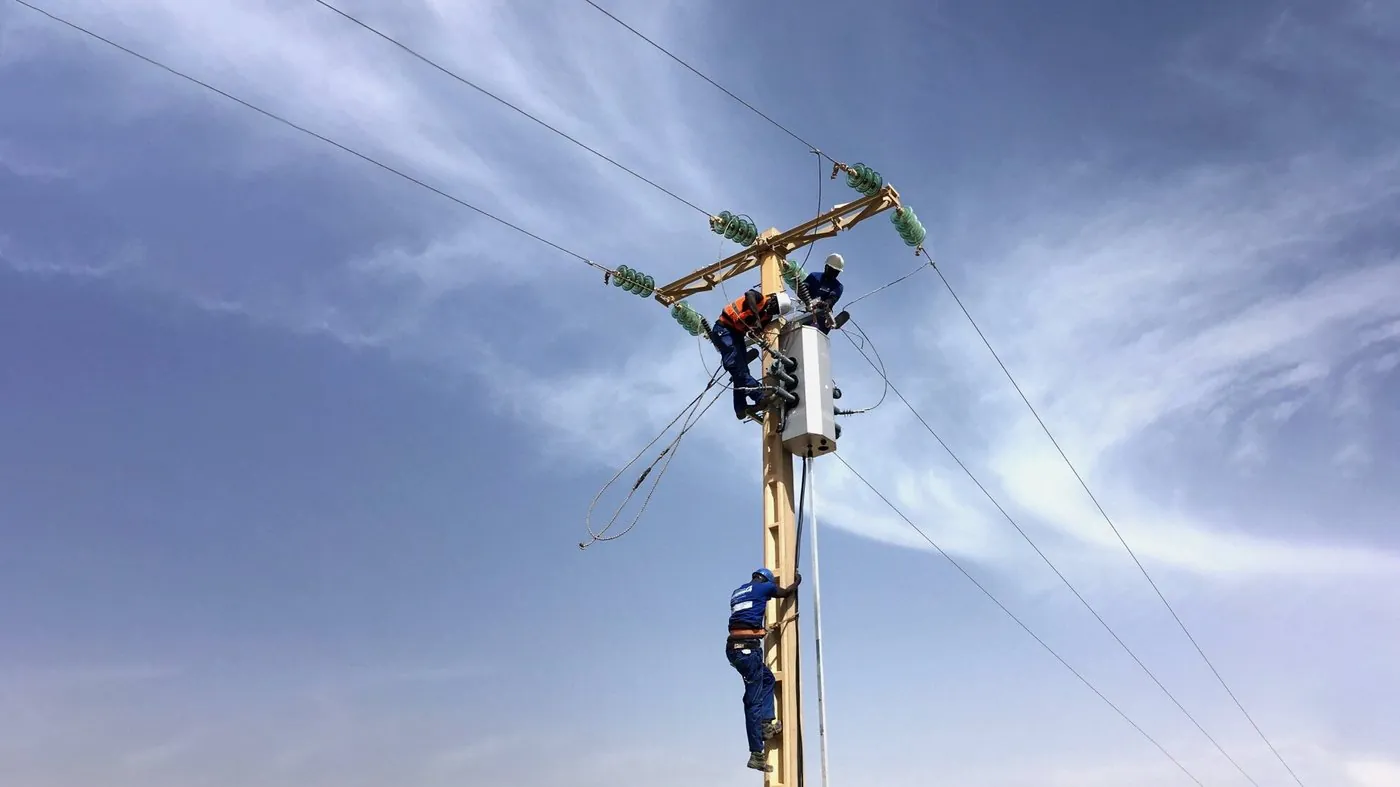
On overhead MV networks, the FPI is installed in a cabinet or directly on the pole. On underground networks, it is integrated into the MV/LV substation, close to the incoming and outgoing switchgear cubicles.
Standard vs. directional FPI: what is the difference?
Two main families of fault passage indicators are used on MV networks:
- FPI - fault passage indicator: detection based on a current threshold. Suited to solidly earthed or low-impedance earthed networks, and to detecting multi-phase faults.
- Directional FPI - directional fault passage indicator: combines current and voltage measurement to determine the direction of the fault. Essential on compensated or high-impedance earthed networks, where earth faults generate currents too low for a standard FPI alone.
ENERTEC sizes and installs both families according to the neutral earthing system of the target network. To learn more, see our reference page on the fault passage indicator (FPI).
ENERTEC telecontrol at national-grid scale
Across northern and western Côte d'Ivoire, ENERTEC connected over 300 fault passage indicators to telecontrol on MV feeders — a deployment commissioned and in operation. Discover the NEDA project →
Our network telecontrol products
A complete range of equipment for the automation and supervision of MV distribution networks.
Detection and location of faults on overhead and underground medium-voltage networks. Significant reduction in outage time and improved continuity of service.
Protection and control cabinets for remote-controlled MV load-break switches. Remote operation of switching assets, measurement acquisition and data reporting to the SCADA system.
Interface cabinets for distributed energy generation (solar, generator sets). Seamless integration of distributed sources into overall network supervision.
Our telecontrol
services
From design to maintenance, ENERTEC covers the entire value chain for your telecontrol projects.
Submit your project →SCADA design and deployment
Custom design and deployment of complete SCADA systems for real-time supervision of your MV distribution assets. Architecture tailored to the size of your network.
Communication protocol integration
Integration of IEC 60870-5-101/104 and DNP3 protocols for reliable communication between field equipment and control centers. Guaranteed interoperability with existing systems.
RTU and load-break switch installation
Installation and configuration of RTUs on every asset. Installation and connection of remote-controlled load-break switches for safe remote operation.
Real-time supervision & telemetry
Implementation of real-time supervision, alarm management and telemetry acquisition. Operational dashboards for your network operation teams.
Corrective and preventive maintenance
Corrective and preventive maintenance contracts for telecontrol systems. Rapid on-site response, remote diagnostics and embedded software updates.
Frequently asked questions about MV network telecontrol
Concise answers to the most common questions about the telecontrol of electricity distribution networks.
What is electrical network telecontrol?
Telecontrol is the remote monitoring and control of the equipment on an electrical network. It relies on a SCADA system, RTUs installed in substations, intelligent electronic devices (IEDs) and a communication network. It enables a dispatcher to view the state of the network in real time and to carry out switching operations (opening/closing switches) without traveling to the field.
What is the difference between MV and HV?
MV (medium voltage) refers to the distribution voltage level, typically between 1 kV and 50 kV (15 kV, 20 kV, 30 kV, 33 kV in Côte d'Ivoire). HV (high voltage) refers to the transmission voltage level, above 50 kV (90 kV, 225 kV, 400 kV). MV network telecontrol covers the capillary network that supplies public distribution substations.
Which protocols are used in MV network telecontrol?
The standard protocols are IEC 60870-5-104 (IP-based telecontrol, the most widespread on modern RTUs), IEC 60870-5-101 (serial variant), DNP3 (used in North America and Asia) and IEC 61850 for digital HV substations and advanced automation. ENERTEC mainly deploys IEC 60870-5-104 and IEC 61850 on the Ivorian network.
What is a fault passage indicator (FPI)?
A fault passage indicator (FPI) is an electronic device installed on the MV network that detects the passage of a fault current above a set threshold. It consists of an electronic unit, one to three current-sensing toroids placed around the conductors, local LED indication and a dry contact reported to the RTU. It enables the faulty section to be located quickly on a long overhead line or an underground network. See our complete page on the FPI.
How much does an MV network telecontrol project cost?
The cost of a telecontrol project depends on the number of substations to be equipped, the choice of RTU, the type of communication (fiber, radio, 4G) and the required level of cybersecurity. As an order of magnitude, equipping a public MV distribution substation ranges from a few thousand to a few tens of thousands of euros depending on the options. ENERTEC carries out a customized sizing study based on the specifications provided by the project owner. Request a quote.
How long does it take to install a remotely controlled substation?
Installing a remotely controlled substation involves several phases: detailed design (1 to 3 weeks), procurement (4 to 12 weeks depending on the equipment), works and connection (2 to 5 days per substation), then testing and commissioning (1 day per substation, plus integration tests with the control center). On a multi-substation program such as ENERGOS or NEDA, deployment proceeds at a steady pace, with several substations handled in parallel.
Which companies provide MV network telecontrol in Côte d'Ivoire?
ENERTEC is one of the reference players in MV network telecontrol in Côte d'Ivoire and West Africa, with recognized experience from the ENERGOS project in Abidjan (247 remotely controlled MV substations) and the recent award of lots 2 and 3 of the NEDA program covering the north and west of the country. Our teams work in partnership with the world's leading equipment manufacturers: Schneider Electric, ABB, Siemens, General Electric, Lucy Electric, Noja Power.
Planning a telecontrol project?
Our team of specialist engineers will study your network and propose a tailor-made solution.